
Key Takeaways
- A Mercedes window sticker can help verify original equipment, factory options, colors, and pricing.
- Its main limitation is that it only describes the vehicle when new, not everything that happened during later ownership.
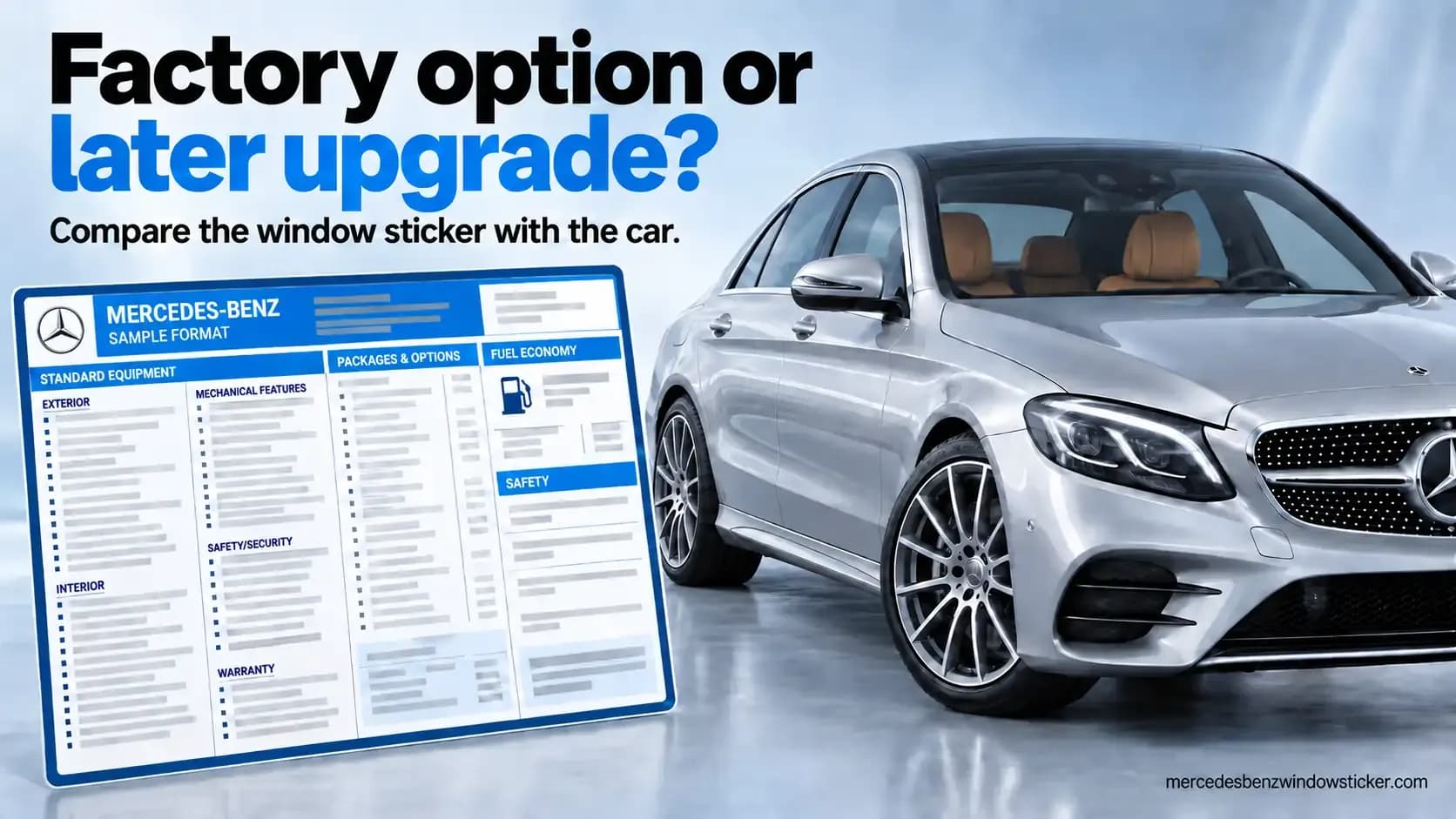
- When buying a used Mercedes, ensure to compare the original sticker with the Mercedes to identify changes that deserve a closer look.
A Mercedes window sticker is most useful for understanding how a vehicle was originally configured and priced. It can help verify factory equipment, options, colors, and MSRP, but it does not document everything that happened to the car after it was sold.
For used-car buyers, the sticker provides an original reference point, not a complete picture of the vehicle history or current condition.
What Is a Mercedes Window Sticker Mainly Used For?
A Mercedes-Benz window sticker documents information associated with the vehicle when new. It may include the following:
- VIN (Vehicle Identification Number)
- Model information
- Exterior color
- Interior color and upholstery
- Standard equipment
- Factory options
- Packages
- Mechanical features
- Safety equipment
- Base MSRP
- Individual option pricing
- Destination or shipping charges
- Total vehicle price
- Fuel economy ratings
- Warranty information
For a used Mercedes buyer, the sticker is useful when a seller’s listing is vague about factory equipment, when valuable options are being used to justify the asking price, or when the vehicle appears to have been modified.
What Can a Mercedes Window Sticker Tell You?
The strongest information on a window sticker relates to the Mercedes-Benz vehicle’s original configuration and pricing.
Original Exterior and Interior Configuration
The sticker can help identify how the vehicle was originally configured. That may include:
- Exterior color
- Upholstery
- Interior color and trim
- Wheels
- Engine
- Transmission
This gives you a documented baseline to compare with the used vehicle. For example, if the sticker shows Lunar Blue Metallic but the Mercedes is currently black, you know the exterior no longer matches the original configuration. The sticker cannot explain why that change occurred. The vehicle may have been repainted, wrapped, or repaired.
Standard Equipment
A Mercedes window sticker may contain a detailed list of equipment included as standard with the vehicle. This can include categories such as:
- Exterior features
- Interior features
- Mechanical equipment
- Safety and security equipment
This distinction matters because not every desirable feature was an extra-cost option. A feature can be original Mercedes-Benz equipment while still being standard rather than separately priced.
Factory Options and Packages
One of the most useful parts of the sticker is its vehicle-specific option information. The equipment may appear as:
- Standard
- Included
- Individually priced
This can help when a seller describes a Mercedes as:
- Fully loaded
- Highly optioned
- Premium equipped
- Factory upgraded
- Equipped with expensive original features
Instead of relying only on advertising language, you can compare those claims with the vehicle’s original configuration. Getting the Mercedes-Benz window sticker by VIN can provide this original equipment and pricing context for a specific vehicle when data is available.
Option Pricing
The sticker may also show how much certain factory options originally cost. This is useful because two features can both be original while having very different pricing treatment.
For example:
- One feature may have been standard.
- Another may have been included as part of the configuration.
- Another may have carried a separate $750 charge.
Knowing these differences helps prevent buyers from treating every factory-installed feature as an expensive standalone option.
Original MSRP and Pricing
The window sticker can also help explain how the Mercedes-Benz vehicle’s original price was built. This may include:
- Base MSRP
- Factory-option prices
- Destination or shipping charge
- Total original price
Original MSRP provides useful historical context, but it should not be confused with the vehicle’s value today. This helps answer questions such as:
- What was the vehicle’s base price?
- Which options increased the original price?
- How much did the vehicle cost in its original configuration?
- Was this example substantially more expensive than a more basic version of the same model?
Example of What a Mercedes Window Sticker Can Reveal
The sample 2017 Mercedes-Benz E-Class window sticker shows how different types of equipment can appear on the same document.
It identifies:
- Exterior: Lunar Blue Metallic
- Interior: Macchiato Beige / Black with MB-Tex Upholstery
- Base MSRP: $54,650
- Original Shipping Charge: $995
- Total Vehicle Price: $60,275
The equipment section also distinguishes between standard, included, and separately priced items.
| Equipment | Sticker status |
|---|---|
| Engine: 2.0L Inline-4 Turbo | Standard |
| Transmission: 9G-TRONIC Automatic | Standard |
| Wheels: 18" AMG 5-Spoke | Included |
| Blind Spot Assist | $550 |
| Heated Front Seats | $750 |
| Heated Steering Wheel | $250 |
| Burmester Surround Sound System | $850 |
| Rear View Camera | $300 |
| Parking Pilot | $750 |
| Burl Walnut Wood Trim | Included |
← Scroll horizontally to see more →
This tells a buyer more than a general statement. For example, the Burmester Surround Sound System appears as a separately priced option, while the Burl Walnut Wood Trim is shown as included. Both form part of the original configuration, but they were not priced in the same way.
Can a Window Sticker Prove the Equipment Is Still Original Today?
No. This is one of the most important limitations of a Mercedes window sticker for used cars. The sticker documents the original configuration. It does not update when later owners replace, modify, or remove equipment.
Wheels and Exterior Equipment May Have Changed
The sticker may identify the original wheels, but a previous owner could have installed:
- Different Mercedes-Benz wheels
- Aftermarket wheels
- Replica AMG-style wheels
- Different wheel sizes
Exterior components can change too, including:
- Paint
- Wraps
- Grilles
- Badges
- Spoilers
- Body styling
The sticker establishes the original specification - not necessarily what is installed today.
Interior Equipment May Have Changed
Later owners may also change:
- Upholstery
- Steering wheels
- Interior trim
- Audio components
- Infotainment equipment
- Decorative pieces
If the current Mercedes differs from the sticker, investigate what changed rather than automatically assuming there is a problem.
Technology May Be Replaced or Retrofitted
Features such as cameras, screens, audio systems, lighting, or parking equipment can sometimes be replaced or modified later. Their presence on a used Mercedes therefore does not automatically prove that they were part of the original configuration. The sticker gives you the reference point needed to make that comparison.
What a Mercedes Window Sticker Will Not Tell You
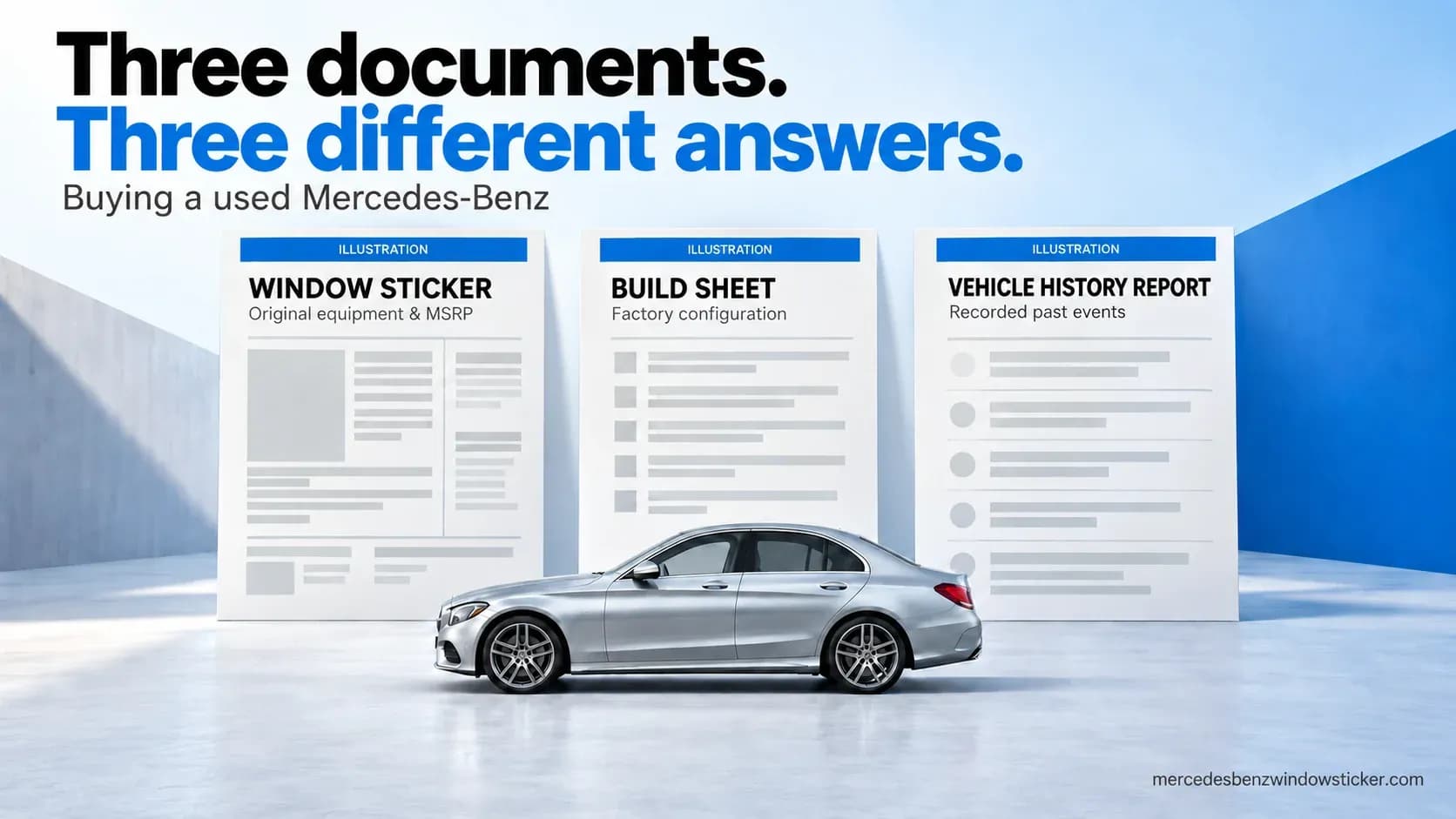
The main limitation of a Mercedes window sticker is straightforward: it describes the original vehicle, not the complete life of the vehicle. Several important used-car questions therefore fall outside its purpose.
It Cannot Show the Vehicle History
A window sticker does not track events that happened after the Mercedes was sold. It cannot establish:
- Accident or damage history
- Insurance-loss events
- Salvage, rebuilt, flood, or other later title records
- Number of previous owners
- Historical mileage readings
- Auction appearances or auction photos
- Later liens or ownership-related events
A Mercedes can have an attractive original specification while also having a complicated history. If you need to understand how these kinds of records fit together, see How to Read a Mercedes-Benz Vehicle History Report.
It Cannot Provide a Complete Service or Repair Record
A window sticker does not document maintenance performed throughout the vehicle’s ownership. It cannot confirm whether previous owners completed:
- Oil changes
- Brake service
- Tire replacement
- Scheduled maintenance
- Mechanical repairs
- Body repairs
Also, the original sticker cannot establish how well later repairs were performed. If a vehicle was damaged years after it was sold, the sticker cannot tell you which panels were replaced, whether structural work was required, or whether the repair quality is currently acceptable.
The Sticker Cannot Confirm Current Mechanical Condition
The sticker can show that the Mercedes originally had a particular feature, but it cannot tell you whether that feature still works. For example, original equipment may include:
- Heated seats
- Premium audio
- Parking assistance
- Driver-assistance equipment
- Suspension equipment
Years later, any of those systems may be working correctly, partly functional, replaced, or in need of repair. The original sticker cannot make that determination. A physical inspection and functional testing are needed.
The Sticker Cannot Tell You What the Mercedes Is Worth Today
Original MSRP is historical pricing information, and not a current appraisal. A Mercedes may have cost more when new because of:
- Expensive packages
- Premium audio
- Driver-assistance technology
- Upgraded wheels
- Interior upgrades
- Other factory options
Current value depends on additional factors such as:
- Age
- Mileage
- Condition
- Maintenance
- Accident and title history
- Current equipment
- Market demand
A highly optioned Mercedes may still be desirable, but its original option prices should not be treated as equivalent resale value.
Does Warranty Information Mean the Mercedes Is Still Covered?
No, the Mercedes window sticker doesn’t indicate the warranty status. It may show warranty terms that applied when the Mercedes was new. Current coverage is a different question and can depend on:
- Original in-service date
- Vehicle age
- Current mileage
- Warranty category
- Certified Pre-Owned coverage
- Extended coverage
Use the warranty information to understand what coverage was initially associated with the vehicle, not as automatic confirmation that the same coverage remains active today.
How Should a Used-Car Buyer Use a Mercedes Window Sticker?
The sticker is most useful when treated as an original reference point. The practical process is to establish the original configuration first, then compare it with the seller’s claims and the vehicle physically.
Confirm the Original Configuration
You should review the following to establish what the Mercedes originally had:
- Exterior and interior colors
- Standard equipment
- Factory options
- Packages
- Wheels
- Mechanical equipment
- Original pricing
Compare the Sticker Information With the Seller’s Listing
Look closely at claims involving:
- Factory options
- Premium equipment
- Original colors
- Expensive packages
- “Fully loaded” descriptions
- Original MSRP
If the seller emphasizes a particular factory feature, check whether the available sticker information supports the claim.
Put the Sticker and the Vehicle Side-By-Side
Now, this is where you inspect the Mercedes by looking for any differences involving:
- Wheels
- Paint
- Upholstery
- Trim
- Equipment
- Technology
- Appearance components
A difference is not automatically negative. It simply tells you that the vehicle changed after its original configuration and that the change may deserve explanation.
Common Mistakes When Using a Mercedes Window Sticker
A window sticker becomes misleading only when buyers expect it to answer questions outside its purpose. These include:
Assuming Every Feature Was an Extra-Cost Option
Some equipment is standard, some is included, and some is individually priced. Read how the sticker categorizes the equipment rather than assuming every factory-installed feature increased the original price.
Thinking the Original Equipment Is Still Installed
Years later, the Mercedes may have different wheels, paint, trim, electronics, or styling components. Always compare the original sticker with the actual vehicle.
Taking the Original MSRP as the Current Value
A high original price provides context about the vehicle when new. It does not determine what the same Mercedes should cost today.
Conclusion on What a Mercedes Window Sticker Can & Cannot Tell
Looking up a Mercedes window sticker by VIN is most useful in establishing the vehicle’s original equipment, options, colors, and pricing. It gives used-car buyers a useful baseline for checking whether the seller’s description and the Mercedes being sold today still match the original configuration.
Accident history, mileage, repairs, ownership, and current mechanical condition fall outside that role. Treat the window sticker as your reference for how the car started, not a complete record of everything that happened afterward.