
Check for Mercedes-Benz Vehicle Recall Information by VIN
Find out about Mercedes-Benz recall status before buying. Enter the VIN to confirm open recalls, active safety campaigns, and get the full vehicle history report to ensure no hidden safety issues.
How to Check for Mercedes-Benz Recalls
Your Mercedes-Benz recall report is just three steps away. Here is exactly how to get it.
Step 1: Enter the VIN
Type the 17-character VIN (Vehicle Identification Number) into the form at the top of this page. You can also check by entering the license plate number and selecting your US state.
Step 2: Search VIN
Click the "Search VIN" button to pull up a preview of the vehicle. You will instantly see details like the year, make, model, trim, engine type, and more.
Step 3: Get Your Mercedes Recall Report
Proceed to payment to access the full recall details and the complete vehicle history report. Your report is available for download as a PDF so you can save or share it anytime.
What Is a Mercedes-Benz Recall?
A Mercedes-Benz recall is an official safety action that takes place when a defect or safety risk is discovered in one of its vehicles. Mercedes-Benz, in coordination with the National Highway Traffic Safety Administration (NHTSA), is required to contact affected owners and provide a fix at no charge.
When you are buying or selling a used Benz, checking for open recalls is one of the smartest things you can do. A vehicle carrying an open recall has an unresolved safety issue that the previous owner may never have addressed. Knowing this before the sale protects your money, your safety, and your peace of mind.
Mercedes-Benz Open Recall Facts and Figures: 2025 Statistics
Here is what the recall data actually looks like for Mercedes-Benz vehicles in 2025, straight from official records, so you can see the full scope.
21 recalls
Multiple campaigns issued across various vehicle systems.
140,000+ Vehicles
Total number of vehicles affected in 2025.
15-20 models
Wide range of models impacted across sedans, SUVs, EVs.
The Benefits of Checking Mercedes-Benz Vehicles for Recalls
Looking up Mercedes-Benz recalls matters, whether you are a Mercedes owner, the buyer, or the person selling it. Here’s why:
Owners
Mercedes-Benz owners who check for open recalls regularly are doing the single most important thing they can for their own safety on the road.
Address Safety Issues Before They Escalate
Open recalls often involve parts that are central to how safely the car operates, like airbags, brakes, or fuel delivery. Catching and fixing them early prevents worse problems later.
Protect the Long-Term Value of Your Benz
A Mercedes-Benz with no recall record is easier to sell and holds its value better than one with unresolved safety notices attached to its history.
Walk Away Paying Nothing for the Fix
All safety recall repairs are completed at authorized Mercedes-Benz dealerships at zero cost to you. There is no reason to leave that kind of work undone.
Buyers
Buyers who run a Mercedes-Benz recall check before purchasing a used vehicle walk into the deal knowing exactly what they are getting.
Get the Facts the Listing Does Not Show You
A sales listing rarely mentions open recalls. Running a VIN check gives you the recall history directly from federal records, not from a seller who may not know.
Turn Recall History Into Negotiating Power
An open recall on a vehicle you want gives you real leverage. You can ask the seller to have it resolved first or use it to negotiate a better price before committing.
Feel Confident About What You Are Buying
A Mercedes-Benz with no open recalls or with a fully resolved recall history gives you solid grounds to feel good about the purchase before you ever drive it home.
Sellers and Dealers
Sellers and dealers who check Mercedes-Benz recall history before listing a vehicle gain a clear edge when it comes to closing deals and building buyer confidence.
Lead With Transparency and Earn More Trust
Sharing recall details before a buyer asks for it signals honesty. Buyers who feel informed are far more likely to follow through and complete the purchase.
Speed Up the Sales Process
A Benz with no open recalls or completed recalled work already is a much easier sell. Fewer surprises mean fewer delays and negotiations, and faster closings.
Keep Yourself Protected After the Sale
Not disclosing a known open recall during a vehicle sale can expose you to legal action or complaints. A vehicle recall check before listing removes that risk entirely.
What Information Does a Mercedes-Benz Recall Reveal?
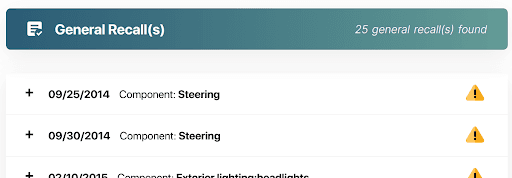
Each recall detail on a Mercedes-Benz report gives you a clear breakdown of the safety issue, the parts involved, and the solution.
Recall Date
This is when NHTSA or Mercedes-Benz officially announced the safety campaign and began the process of notifying registered owners.
Affected Components
This identifies the exact part or system with the confirmed defect, such as the airbag module, seatbelt tensioner, fuel pump, or electronic control unit.
Campaign Number
The campaign number is the internal tracking code Mercedes-Benz uses for the recall. Bring this number with you when visiting a dealer for the repair.
Recall Number
This is the federal reference code used to track and verify the recall across all official government safety databases nationwide.
Remedy Description
This explains exactly how Mercedes-Benz plans to fix the problem, whether by replacing a defective part, applying a software update, or performing a structural modification.
Summary and Note
A clear explanation of what caused the recall and any specific notes about how the defect may affect your individual vehicle's performance or safety.
Other Records to Find in a Mercedes-Benz VIN Check Report
Our full report provides a lot more than just recalls. Here is a complete look at what else is included.

Vehicle Usage Records
See how the vehicle was actually used by past owners. It tells you whether the car was a personal car, a rental unit, or a corporate fleet vehicle.

Ownership History
Find out how many registered owners this vehicle has had and how long each one held on to it.

Title Brand Check
Check for branded titles such as salvage, flood, or rebuilt. These titles can significantly affect the vehicle's insurance eligibility and resale potential.

Accident Records
Review any reported collision history tied to this vehicle. This covers incidents ranging from minor parking lot damage to serious highway crashes, and gives you a clearer picture of how the car has been treated over the years.

Mileage Records
Track changes in the odometer reading across different reported points in the vehicle's history. Inconsistencies in mileage can be an indicator of odometer fraud.

Lien and Loan Records
Find out whether an active loan or lien is attached to the car. Buying a car with an unresolved lien means the lender still holds a legal claim to it.

Theft Records
Check whether the Mercedes-Benz was ever reported stolen. A prior theft can create issues with title history, insurance coverage, and future resale.

Sales Listing History
See how this vehicle has been listed and described in past sales. Comparing listings can reveal price inconsistencies and mileage discrepancies.

Auction Records
See whether this car has ever moved through a dealer or public auction. You would see condition grades, photos, inspection notes, and sale prices.
Recall Check Found a Salvage Title and Saved Him $2,000
Adrian had been looking for a used luxury sedan and found a 2015 Mercedes-Benz C-Class at a price he liked. The seller told him it was a clean car with a solid service history. Adrian ran a check before making any offer.
What the Report Found
- No open recall records
- 1 accident record
- 1 lien or loan record
- 1 auction record
- Salvage and rebuilt title brands
Possible Past Incidents and the Car's Condition
A salvage and rebuilt record meant the C-Class had been written off after serious damage and put back together before being sold again. The auction record suggested a previous buyer had already looked at it and walked away.
How the Report Helped Adrian
Adrian used the salvage and rebuilt records to negotiate firmly. He bought the Mercedes for $2,000 less than the asking price. The recall check report gave him the proof he needed to pay a price that reflected the car's real history.
What to Do if Your Mercedes-Benz Has an Open Recall
Finding an open safety recall does not have to be stressful. Here are three steps to take to get it handled the right way.
- 1
Confirm the Recall
Use our VIN check tool to verify that the open recall is specifically connected to your Mercedes-Benz. - 2
Schedule an Appointment
Call or visit your nearest authorized Mercedes-Benz dealership and arrange with them how you can come in for an open recall repair. - 3
Visit and Repair
Take the car for the fix at the scheduled time. Recall repairs are performed by factory-trained technicians and are done at no cost to you.
How to Find Your Mercedes-Benz VIN Number
Your Mercedes-Benz VIN is a 17-character code that is unique to your vehicle. Here are the places you are most likely to find it easily.
On the Vehicle | In the Vehicle’s Paperwork |
Driver’s side dashboard | Vehicle’s registration |
Driver's Side Door Jamb | Title |
Engine block | Insurance policy |
Frame Rail | Maintenance records |
Top Faults Found in Recalled Chrysler Vehicles
Below are some defects that have driven some of the most significant Mercedes-Benz recall actions in recent history.
Faulty Airbag Deployment
Defective airbag systems failed or deployed incorrectly between 2016 and 2023, affecting over 50,000 vehicles globally, increasing injury risk during crashes significantly.
Fuel Pump Failure Causing Stalls
Nearly 93,000 vehicles were recalled in 2023 due to fuel pump defects, causing sudden engine stalls and increased crash risks.
High-Voltage Battery Fire Risk
Between 2022 and 2024, over 11,000 EQB electric vehicles were recalled in 2026 due to battery cell failures that could trigger fires while driving or parked.
Brake Booster Corrosion Failure
15,604 vehicles from 2006-2012 models were recalled later after moisture caused brake booster corrosion, reducing braking performance and increasing accident risks significantly.
Electrical Wiring and Ground Cable Overheating
Between 2021 and 2024, thousands of vehicles were recalled due to loose 48-volt ground connections, causing overheating, electrical shorts, and potential fire hazards in engine compartments.
Steering System Defect
From 2023 to 2026, around 3,700 vehicles were recalled due to improperly tightened steering coupling bolts, increasing the risk of steering failure and potential crashes.
What Mercedes-Benz Models Do We Support?
Our tool supports every Mercedes-Benz model ever sold in the United States. Here are the top popular models you can look up right now.
Mercedes-Benz C-Class | Mercedes-Benz CLA | Mercedes-Benz SL |
Mercedes-Benz E-Class | Mercedes-Benz CLS | Mercedes-Benz AMG GT |
Mercedes-Benz S-Class | Mercedes-Benz GLB | Mercedes-Benz Metris |
Mercedes-Benz GLC | Mercedes-Benz GLA | Mercedes-Benz Sprinter |
Mercedes-Benz GLE | Mercedes-Benz EQS | Mercedes-Benz ML-Class |
Mercedes-Benz GLS | Mercedes-Benz EQE | Mercedes-Benz EQB |
Mercedes-Benz A-Class | Mercedes-Benz G-Class |
|
Find More Helpful Mercedes-Benz VIN Tools
Here are additional tools to give you a complete story of any Mercedes-Benz you are researching.
Mercedes-Benz VIN Decoder
Decode any Mercedes-Benz VIN to reveal the car's full factory specs and original build configuration.
Mercedes-Benz Build Sheet
Access the factory build sheet to see exactly how your Benz was equipped when it left the plant.
Mercedes-Benz MSRP Lookup
Look up the original sticker price of any Mercedes-Benz model to understand its value.
Mercedes-Benz Warranty
Check current warranty coverage on any Mercedes before purchasing or booking a service appointment.
Get a Full Mercedes-Benz Recall Check Now
Do not settle for guessing. Run a Mercedes-Benz recall check by VIN today and get the complete vehicle history report you need to make the right call before any money changes hands.
FAQs About Mercedes-Benz Recall Check
To check for open recalls on your Mercedes, enter your 17-digit VIN into our recall lookup tool to pull up any open or completed recall campaigns connected to your specific Mercedes-Benz within seconds.
Yes. Federal law requires Mercedes-Benz to cover all safety recall repairs at no charge to the vehicle owner. Take your car to any authorized Mercedes-Benz dealership to get the work done.
It depends on what is being fixed. Some repairs are completed in a few hours, while more involved procedures may require an overnight stay. Your dealer can provide an estimate when you book.
It depends on the defect involved. If the recall covers something that directly affects driving safety, like the brakes, steering, or airbags, contact your dealer immediately and limit driving until it is repaired.
If the repair was completed, your report should show the recall as resolved. If it still appears open, bring the vehicle to a Mercedes-Benz dealer to verify the recall status and update it accordingly.
Common locations to find your Mercedes Benz VIN include the driver's side dashboard at the base of the windshield, the door jamb sticker on the driver's side, and your vehicle registration, title, or insurance documents.