
A Mercedes-Benz window sticker tells you how a vehicle was originally sold when it was new. It shows the original MSRP, factory equipment, optional features, colors, warranty coverage, fuel economy, safety ratings, and final vehicle price.
If you’re shopping for a used Mercedes, that matters. A car can look sharp in photos, wear the right badge, and still have fewer factory features than the seller claims. A Mercedes-Benz window sticker gives you the original record, so you can compare the listing with the vehicle in front of you.
Key Takeaways
- A window sticker shows original MSRP, factory equipment, options, warranty, fuel economy, and safety ratings.
- It helps used buyers compare similar Mercedes-Benz models with more confidence.
- It does not replace a vehicle history report, build sheet, inspection, or service record.
What a Mercedes-Benz Window Sticker Actually Shows
A Mercedes-Benz window sticker is the original retail label for a specific vehicle. It is also called a Monroney label. The name sounds official because it is. This label was created to show buyers what the vehicle included when it was sold new.
Think of it as the car’s original sales receipt, but with more useful detail. It does not just show a price. It explains the vehicle’s identity, factory equipment, selected options, warranty coverage, fuel economy, and safety information.
For used car buyers, that is valuable because Mercedes-Benz vehicles can change over time. Wheels get replaced. Screens get upgraded. Interiors get repaired. Badges may not tell the whole story. A listing might say “loaded,” but the sticker tells you what was actually part of the original build and retail sale.
That is the real value of understanding Mercedes window stickers. You stop guessing.
Start by Checking the Vehicle Specifications
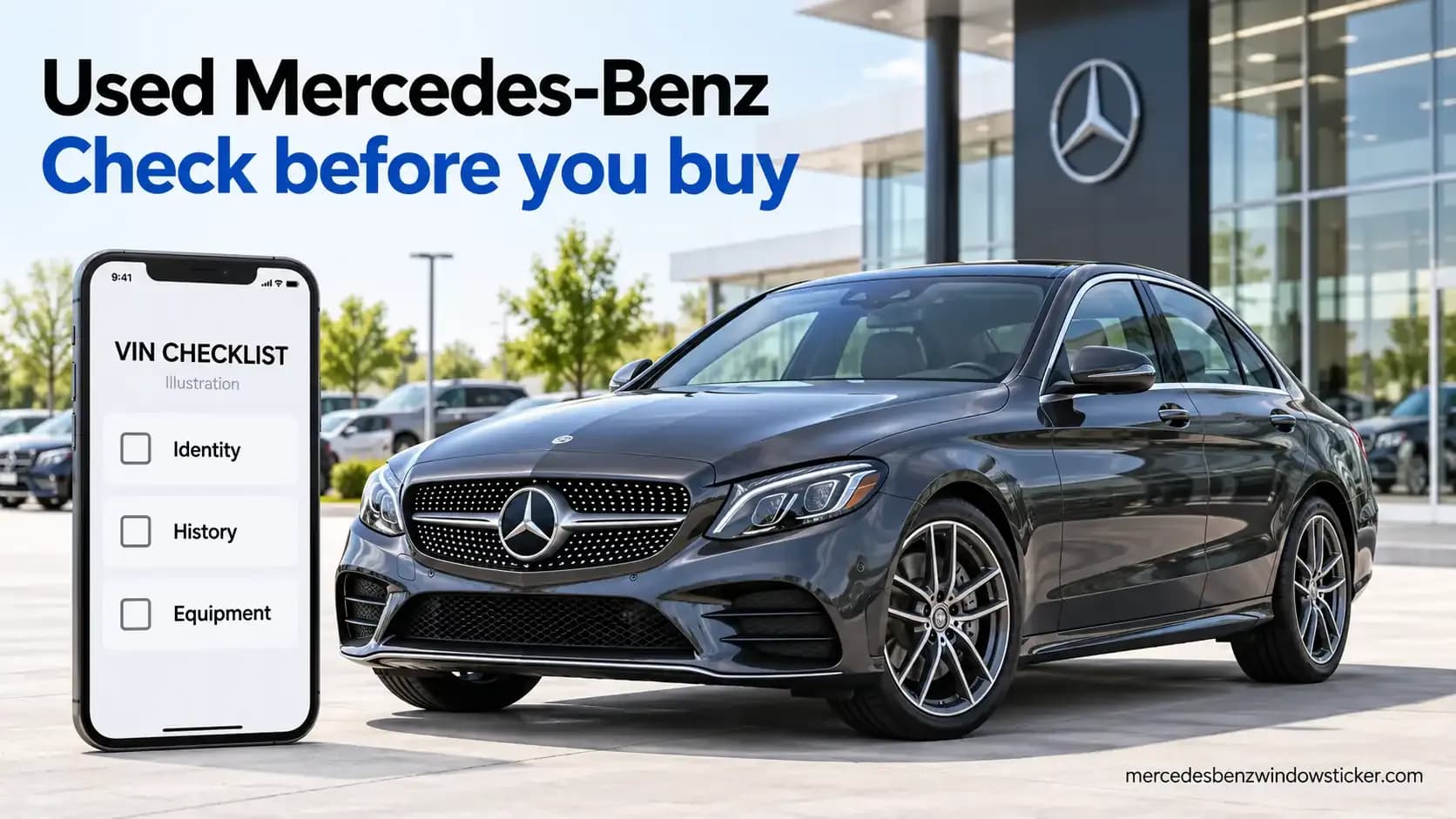
VIN
The VIN should match the number on the dashboard, driver-side door jamb, title, registration, and seller paperwork. If one character is different, pause and check why.
Year, Make, and Model
This confirms the exact Mercedes-Benz tied to the sticker. A seller may describe a car as one model year, while the VIN record points to another.
Trim or Series
Trim helps explain why two cars with the same badge can feel different. One E-Class may be fairly simple. Another may have premium packages, upgraded wheels, or extra cabin technology.
Exterior and Interior Color
Factory color information can help identify repaint work, interior swaps, or rare color combinations that may affect buyer interest.
You know what? Many shoppers rush straight to the total price. But the identity section is where you make sure you are reading the right story.
Read the MSRP Like a Price Breakdown, Not Just One Big Number
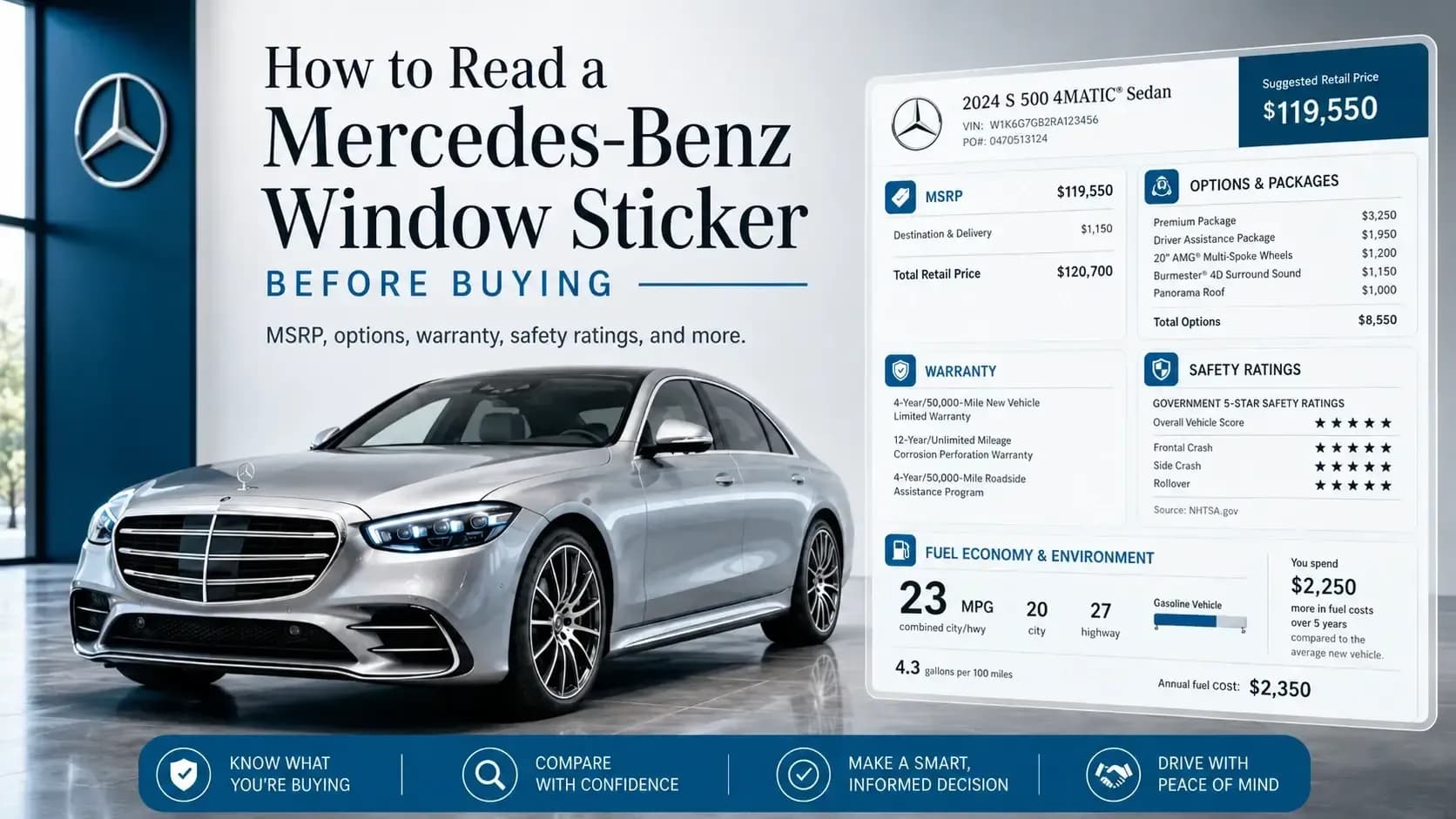
MSRP means Manufacturer’s Suggested Retail Price. It is the suggested retail price when the Mercedes-Benz was sold new.
This number does not tell you what the car is worth today. Mileage, condition, ownership history, location, demand, and service records all affect current value. Still, MSRP gives you a clean starting point. It shows how the vehicle was originally priced before time and wear entered the picture.
Base MSRP
Base MSRP is the starting price before options, packages, colors, and delivery charges were added. It reflects the core model and standard equipment.
Factory Options
Factory options are extra features selected when the vehicle was new. These may include upgraded audio, heated seats, driver-assistance systems, special wheels, premium paint, or parking technology.
Destination Charge
This is the delivery or shipping charge listed on the original sticker. It was part of the new-vehicle pricing structure.
Total Vehicle Price
This is the final original price after the base MSRP, factory options, packages, and destination charge were added together.
Here’s the thing: two similar Mercedes-Benz vehicles can have very different sticker prices. Same year, same model, same body style — but not the same equipment.
Separate Standard Equipment From Optional Features
This is where the sticker becomes more useful than a seller description.
Standard equipment means features included at no extra charge. Optional features are selected beyond the base setup. Included features may come through a trim, package, or configuration. These differences matter because not every impressive feature adds the same value.
Standard Equipment
Standard equipment may include exterior lighting, mirrors, interior comfort items, safety systems, infotainment features, mechanical equipment, and basic cabin details.
Optional Features
Optional features may include heated seats, premium audio, driver-assistance systems, upgraded wheels, special paint, parking assist, or advanced technology.
Included Features
Some items may be listed as included because they are part of a package, trim level, or factory configuration.
Factory Packages
Packages group multiple features together. A technology package, comfort package, appearance package, or AMG-related package can make two similar cars feel very different.
This is why a Mercedes window sticker lookup is useful before buying. A seller may highlight a feature because it sounds premium, but the sticker helps you see whether it was standard, included, or selected as an option.
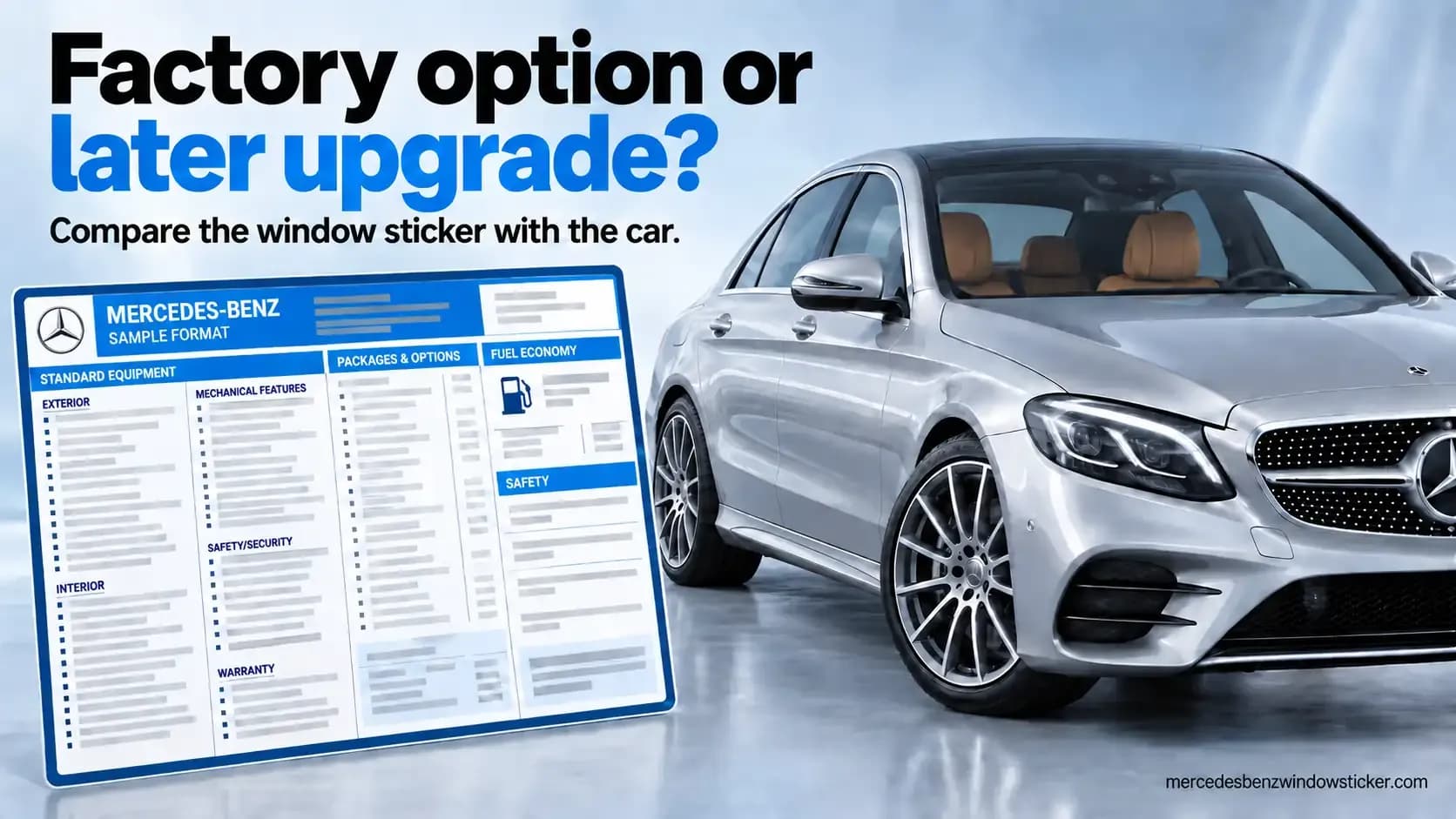
And no, aftermarket additions are not the same as factory options. A later wheel upgrade may look great, but it is not the same as a factory-listed wheel package.
Check Warranty, Fuel Economy, and Safety Ratings With Context
After price and options, move to the practical sections. These are not always the most exciting, but they help you understand ownership costs and original coverage.
Warranty Coverage
This portion could have basic coverage, powertrain coverage, corrosion/perforation coverage, and roadside assistance. In case of most Mercedes-Benz vehicles, the coverage would be provided in terms of months and miles.
For pre-owned vehicles, do not take it for granted that the coverage would be still valid. This is because of time, mileage, ownership status, CPO coverage, and extended warranty terms.
Fuel Economy
Fuel economy could cover city MPG, highway MPG, combined MPG, annual fuel cost, and emission data. For EV Mercedes-Benz vehicles, MPGe or electric range might appear in fuel economy section.
Fuel efficiency could be different from theoretical estimates. Factors such as tires, traffic, weather conditions, car maintenance, and driving skills can make a difference. Harder press on gas pedal could be a reason for unrealistic estimates.
Safety Ratings
The safety section may include government crash test ratings when available. These can include overall score, frontal crash, side crash, and rollover.
Safety ratings should be compared with vehicles of similar size and weight. A compact sedan and a large SUV are not the same kind of comparison, even when the stars look similar.
Environmental Ratings
Some stickers include greenhouse gas or emissions information. It may not be the first thing every buyer checks, but it can matter for long-term ownership cost and city driving concerns.
What a Window Sticker Cannot Tell You
A window sticker is powerful, but it is not a crystal ball.
It shows you what the car was originally sold for. It doesn’t show how the previous owner took care of the vehicle, how well the maintenance was performed, and if the odometer reading is consistent. This is when other documents step in.
The window sticker is all about the information on the initial sale of the vehicle MSRP, equipment, options, warranty, fuel economy, and safety information.
The build sheet is more about the factory specifics and vehicle configuration.
A vehicle history report is all about post-sale incidents: title brands, accidents, ownership history, auction data, odometer readings, liens, thefts, and salvage history.
VIN decoder shows the basic specs of the vehicle. Different documents for different purposes. Different drawers in one garage.
How to Read a Mercedes-Benz Window Sticker Step by Step

If you are checking a used Mercedes-Benz on your phone, keep the process simple. Here is a practical order that works.
1
Match the VIN
Compare the VIN on the sticker with the dashboard, door jamb, title, registration, and seller documents.
2
Confirm the Model and Trim
Check whether the model year, trim, body style, and drivetrain match the listing.
3
Review the MSRP Breakdown
Look at base MSRP, factory options, packages, destination charge, and total vehicle price.
4
Check the Options Carefully
See which features were standard, included, or added as factory options.
5
Review Warranty and Safety Details
Use these sections to understand original coverage and safety information, but verify current warranty status separately.
6
Compare the Sticker With the Actual Car
Look at the wheels, paint, upholstery, infotainment, seats, and visible equipment. The sticker shows the original setup. The car in front of you shows what exists now.
When a Window Sticker Helps Most
A Mercedes-Benz window sticker explained step by step can help many users, but it is especially useful in a few common situations.
Before Buying From a Private Seller
Private listings may not include complete factory details. A sticker helps you confirm what the car originally included before you make an offer.
When Comparing Two Similar Cars
Two Mercedes-Benz models can look almost identical online. The sticker can show which one has better factory equipment.
Before Selling Your Mercedes-Benz
Sellers can use the sticker to show original MSRP, options, colors, and equipment more clearly.
When Checking a Car’s Value Story
Original MSRP does not equal current value, but it helps explain why one vehicle may be priced higher than another. If your main goal is pricing research, an original Mercedes MSRP lookup can help you focus on the price side of the record.
Final Thoughts
A Mercedes-Benz window sticker will not give you all information about a used vehicle. It will not show how the previous owner maintained the vehicle, what maintenance the car had missed or the condition of its paint in afternoon sun.
However, it will show how the car was when it was brand new. And this is a great starting point.
FAQ for Mercedes-Benz Window Stickers
How to interpret a Mercedes-Benz window sticker before buying?
Begin with checking VIN, year, model, trim, color. Consider MSRP, standard features, factory options, fuel economy, warranty, safety rating. Compare the sticker and the vehicle.
What is a Mercedes-Benz window sticker?
It is an original retail window sticker of a particular vehicle. It contains original MSRP, factory equipment, options, packages, warranty details, fuel economy, safety ratings, and vehicle identification information.
Is a Mercedes-Benz window sticker a Monroney label?
Yes. Monroney label is an official new-vehicle window sticker. Usually buyers use both terms when referring to original factory and retail vehicle information.
How to get a Mercedes window sticker by VIN?
Apply to a Mercedes window sticker lookup and enter VIN. The output will contain original MSRP, factory options, packages, colors, warranty details, safety ratings, and other information about the vehicle.
Where to find an original Mercedes window sticker for free?
Check old owner paperwork, dealer's documents, photos of the listing, seller's documents. Original Mercedes-Benz window sticker by VIN is not always free, especially if the vehicle is old.
What does MSRP mean on a Mercedes-Benz window sticker?
It stands for Manufacturer's Suggested Retail Price. It is an original suggested retail price for the vehicle at the moment of original sale without taxes, registration, dealer accessories, and further market changes.
Can a window sticker include factory options?
Yes. A window sticker can contain factory options, packages, included equipment, colors, upholstery, and other selected features that are related to the vehicle's VIN.
Why do two similar Mercedes-Benz models have different sticker prices?
Because they have different factory options, packages, paint, upholstery, wheels, trim, technology, safety and destination charge.
Does a Mercedes-Benz window sticker prove accident history?
No. A window sticker provides original factory and retail information about a vehicle. Accidents, title brands, ownership history, mileage, thefts, liens, salvage history should be revealed in a vehicle history report.
Is a window sticker helpful for car flippers?
Yes. Car flippers can use it to check original MSRP, factory options and equipment before selling a Mercedes-Benz